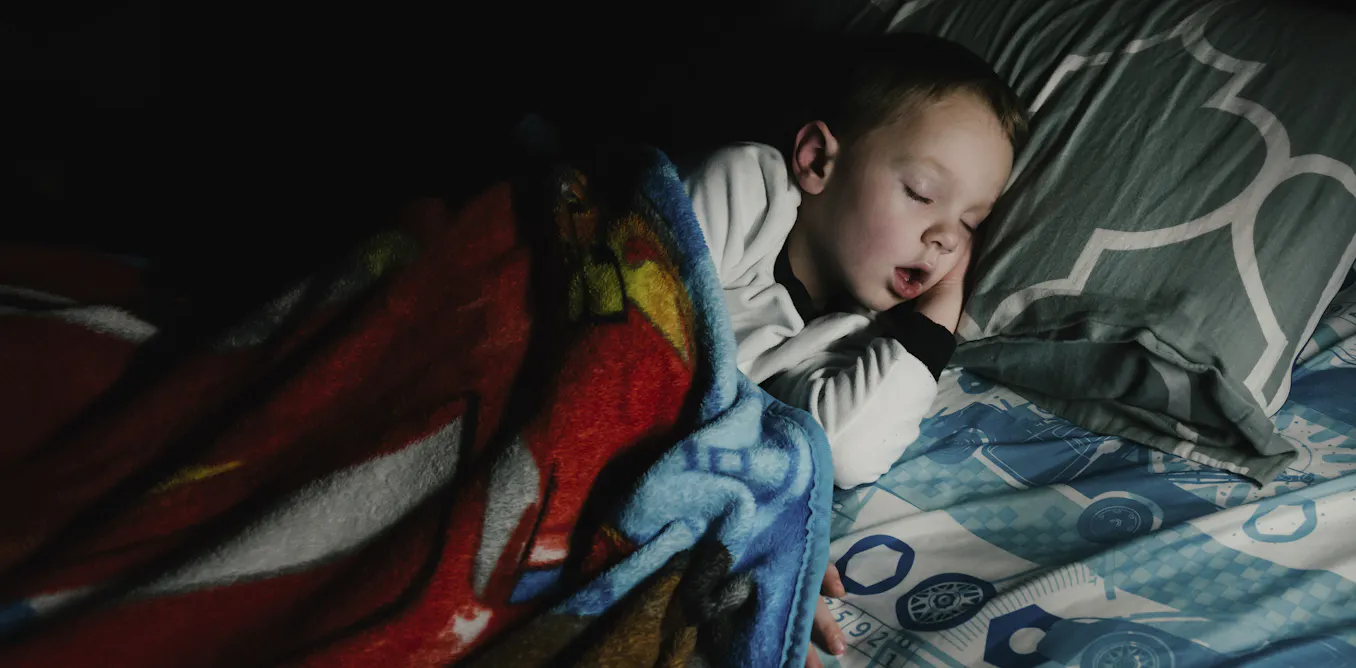
Mubina, age 15 from Uzbekistan, inquired about why people talk while sleeping. Sleep remains a mystery for many, despite being a universal experience.
Read More
As a sleep psychologist, I often hear questions about sleep—its necessity, the nature of dreams, and even whether pets dream. Conversations often arise about siblings who mumble in their sleep or individuals who inadvertently engage in dialogue during slumber parties.
Having studied sleep for nearly two decades, I find great interest in discussing parasomnias, which include behaviors such as nightmares, sleepwalking, and sleep talking. While commonly harmless, these behaviors are considered disorders if they occur frequently enough to cause issues.
During sleep, the body goes through various stages, including about 25% REM (rapid eye movement) sleep, where most vivid dreaming occurs, and 75-80% non-REM sleep, important for bodily rest and repair. Sleep cycles through these stages roughly every 90 minutes, with more non-REM sleep at the beginning of the night transitioning to increased REM in the early morning.
Research indicates that all mammals require sleep, which is crucial for memory consolidation, growth in children, and the activation of the immune system. For optimal health, teenagers should aim for 8-10 hours of sleep each night; younger children need even more.
Despite appearances, the brain remains active during sleep, with specific areas responsible for language potentially remaining active while others that inhibit speech are dormant. This is thought to explain sleeptalking, which often consists of mumbles, laughs, and whispers rather than coherent speech. When actual words are spoken, they frequently include “no,” and may involve common themes such as conflict.
About 80% of what a sleeptalker verbalizes during REM sleep aligns with their dream content. Interestingly, sleeptalkers may respond to questions about half the time, but there’s no evidence that they divulge secrets.
Current research is limited, but findings suggest that sleeptalkers generally experience more interrupted sleep and less REM sleep than non-sleeptalkers. The underlying cause of sleeptalking may lie in the brain's gradual transition to sleep, with certain areas staying active longer.
Sleeptalking is particularly prevalent in children, likely due to their higher amounts of slow-wave sleep, which diminishes with age. Although sleeptalking is normal, if it becomes concerning or is accompanied by other sleep disorders, consultations with a sleep psychologist can be beneficial.
Lastly, it's noted that sleeptalking and related phenomena often increase when individuals are overtired, highlighting the importance of sufficient sleep. If you experience sleeptalking, remember that it’s generally harmless and may indicate a need for more rest.