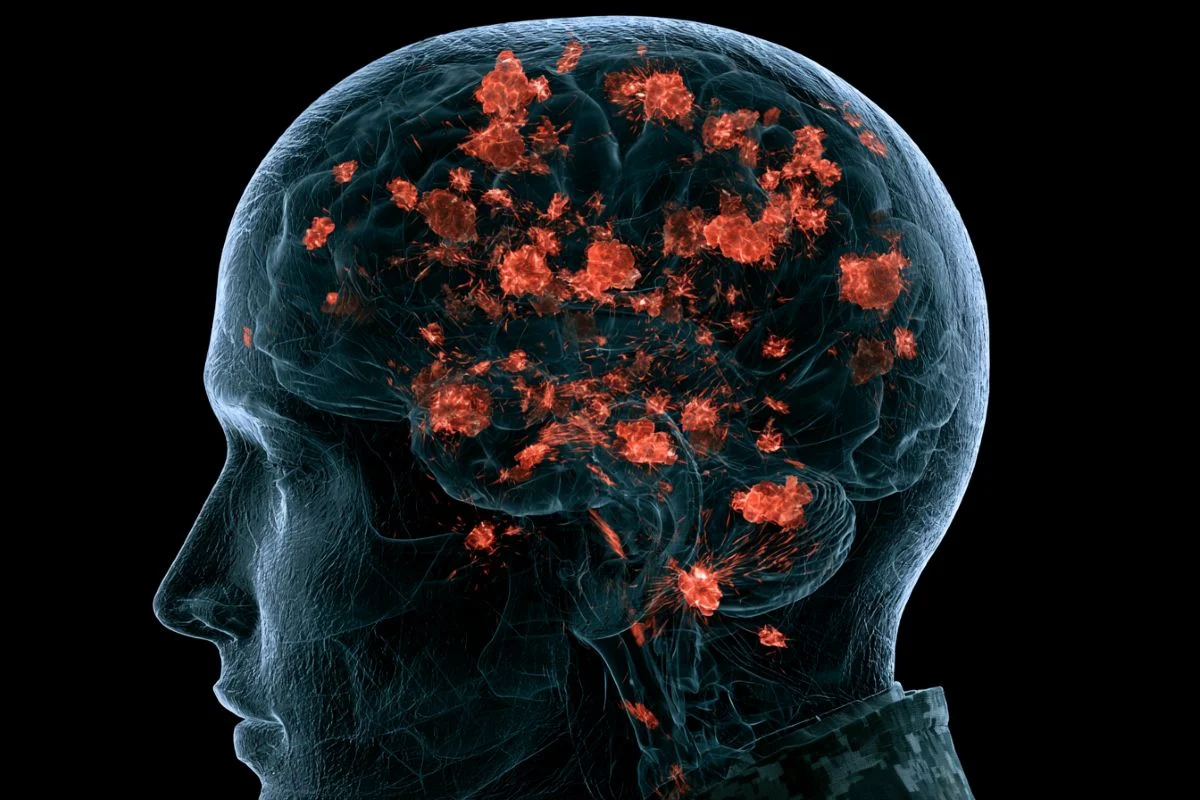
A study from the University of California San Diego School of Medicine and Veterans Affairs San Diego Healthcare System reveals that individuals with higher levels of anti-NMDAR1 antibodies exhibit a reduced risk of developing depression and PTSD symptoms following traumatic brain injury (TBI). Active-duty Marines with elevated circulating levels of these antibodies showed a 25% lower risk for post-deployment depressive symptoms and a 22% lower risk of PTSD compared to those with lower antibody levels.
Read More
The study, published in Molecular Psychiatry, examined 1,025 Marines before and after a seven-month deployment to Afghanistan from 2011 to 2013. Among those with a lifetime history of TBI, Marines in the highest quartile of anti-NMDAR1 antibodies reported significantly lower depression and PTSD symptoms upon return from deployment. Additionally, these Marines were less likely to require psychiatric medications, demonstrating a correlation between high antibodies and both decreased severity of symptoms and a lower prevalence of moderate-to-severe depression.
Researchers found that anti-NMDAR1 antibodies remained detectable in the serum for over 12 months, suggesting they might represent a long-term biological marker rather than a temporary response. Furthermore, the study noted no significant association between these antibody levels and generalized anxiety symptoms, indicating a specific protective role against depression and PTSD.
The protective effect of the antibodies likely lies in their isotype size. Preclinical findings indicated that small IgG antibodies could impair cognitive function by entering synaptic clefts, while larger IgM antibodies, which are predominant in the Marines studied, bind to extrasynaptic NMDA receptors. This binding could inhibit excessive excitotoxic damage following TBI.
The study also draws parallels with ketamine, a treatment thought to block NMDA receptors, which demonstrates a shorter therapeutic effect compared to the sustained response observed with anti-NMDAR1 antibodies.
Further research is needed to confirm the protective role of natural anti-NMDAR1 antibodies following TBI and to understand their mechanism of action. The analysis contributes to the broader Marine Resiliency Study II, which aims to explore resilience factors against PTSD in military populations.
Co-senior author Victoria B. Risbrough, PhD, highlighted the significance of these findings, suggesting that understanding the functionality of these antibodies could lead to new approaches in identifying individuals most at risk after TBI and potential interventions. The study was partially funded by the National Institutes of Health and the U.S. Department of Veterans Affairs.