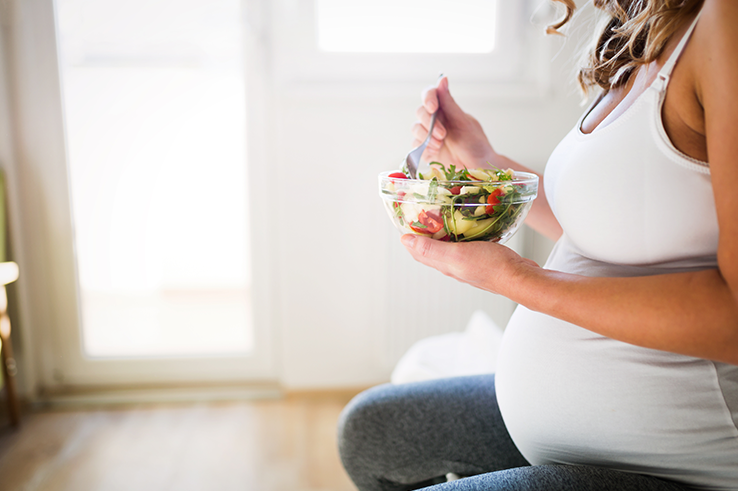
A study involving nearly 1,500 pregnant participants, funded by the National Institutes of Health's Environmental influences on Child Health Outcomes (ECHO) Program, indicates that adherence to dietary guidelines during pregnancy may decrease exposure to certain environmental chemicals.
Read More
Researchers Diana Pacyga, PhD, MS, and Jessie P. Buckley, PhD, MPH, from the UNC Gillings School of Global Public Health sought to determine the relationship between diet and chemical exposure. They noted that dietary choices can impact the amount of environmental chemicals that enter the body through food and everyday products.
The study revealed that participants were exposed to an average of 45 different environmental chemicals, emphasizing the necessity to explore how healthier eating patterns might influence these exposures. Buckley noted that reducing chemical exposure is especially critical during pregnancy due to previous studies linking specific chemicals to negative health outcomes for mothers and children.
In their analysis, the researchers measured over 100 chemicals in urine samples and assessed participants' adherence to the U.S. Dietary Guidelines for Americans.
Findings showed that pregnant individuals with diets closely aligned with these guidelines, which included increased intake of lean protein, exhibited lower levels of certain chemicals typically found in food packaging or produced during cooking. For instance, one type of phthalate, associated with plastic packaging, was approximately 13% lower in those who followed the dietary guidelines more closely.
Pacyga remarked that adhering to the U.S. Dietary Guidelines could benefit both nutritional needs during pregnancy and may help minimize exposure to prevalent industrial chemicals.
However, the study also found that this dietary pattern did not universally lower exposure to all chemicals. Consuming more fruits and vegetables, while decreasing added sugars, was linked to elevated levels of some pesticides often found on fresh produce.
The research highlights the complex interactions between diet and chemical exposure, suggesting that while a diet rich in fruits, vegetables, whole grains, and lean proteins may lower some exposures, it can increase others.
To mitigate pesticide exposure while enjoying healthy produce, Pacyga advised consumers to buy organic and wash or peel fruits and vegetables when possible.
The researchers stressed the importance of following dietary guidelines for a healthy pregnancy but suggest future dietary recommendations could also incorporate strategies to minimize chemical exposure. Buckley suggested that adjustments to dietary guidelines could enhance protection for pregnant women while maintaining nutritional recommendations.
The findings were published in the American Journal of Clinical Nutrition under the title "Dietary guidelines adherence and pregnancy exposure to 10 classes of priority chemicals: An observational study in the ECHO Cohort."
For further details, contact the UNC Gillings School of Global Public Health communications team.